How to Style Curly Hair: The Complete Guide to Tools, Technique & Products
TL;DR: The best way to style curly hair is to build definition before it dries by gently cleansing, detangling, applying lightweight stylers to wet/damp hair, and drying with minimal disruption.
Curly hair responds best to low-friction drying, careful product layering, and air drying or diffusing with moderate heat. Routines vary based on curl pattern, density, porosity, and product weight tolerance.
While curls can look effortless, soft and defined results come from understanding curl behaviour, proper tools, and frizz prevention.
Many routines fail by relying on extra product rather than technique. In reality, curl definition depends on a combination of cleansing, detangling, water retention, even product distribution, low friction, and proper drying.
Start By Understanding Your Curl Pattern
Curl pattern is not the only thing that matters, but it does change how hair tends to respond to moisture, manipulation, and product weight.
The commonly used curl typing system ranges from Type 1 straight hair to Type 4 coily hair. For styling purposes, most people looking for curl guidance fall into Types 2 through 4.
TYPE: 2A to 2C
Description: Wavy
What it often needs: Lightweight stylers, careful clumping, enough hold to prevent puffiness
TYPE: 3A to 3B
Description: Curly
What it often needs: Balanced moisture and hold, gentle detangling, frizz control
TYPE: 3C
Description: Tight curly
What it often needs: More lubrication, more shrinkage support, careful drying
TYPE: 4A to 4C
Description: Coily
What it often needs: High slip for detangling, moisture support, low-disruption styling
Curl type is only part of the picture. Density, strand thickness, porosity, previous chemical processing, and local humidity can all affect styling results.
That does not mean every curl needs heavy products. It means curls usually need a routine that helps with lubrication, slip, and cuticle smoothing without collapsing the pattern. The challenge is balancing moisture with shape retention.
Frizz tends to increase when curls are disturbed while wet, dried too aggressively, brushed once set, or coated with formulas that are too heavy for the hair’s actual needs.
You do not need a huge collection of tools. A few well-chosen basics usually matter more than a crowded shelf.
1. A low-friction towel or cotton T-shirt
Traditional terrycloth towels can rough up the cuticle because their loops create more friction against the hair surface.
For curly hair, that friction can break apart curl clumps before styling is even finished. A microfiber towel or smooth cotton T-shirt is gentler.
Instead of rubbing, blot or scrunch upward to remove excess water. That helps preserve natural grouping and limits early frizz.
If you use plopping, keep in mind that results vary. Some people get better definition and faster drying, while others notice flattening at the roots or irregular shape. It is a technique worth testing, not a rule everyone must follow.
2. A detangling tool that matches your hair
Curly hair is usually easiest to detangle when it is wet and coated with a slippery conditioner or detangler.
Fingers are the gentlest option for fragile, highly textured, or easily snapping hair. A wide-tooth comb or flexible detangling brush can speed things up for denser hair.
The key is not the tool alone. It is the amount of slip, sectioning, and starting from the ends instead of forcing through from the roots.
3. A diffuser
A diffuser spreads airflow over a larger area so curls are less likely to be blown apart while drying.
It does not eliminate the possibility of frizz, but it can reduce mechanical disruption compared with a bare dryer nozzle. Use low to moderate heat and low to moderate airflow.
Higher heat can speed drying, but it can also leave some hair types rougher and less defined.
If your goal is smooth, defined curls with less puffiness, a diffuser is usually more helpful than rough air drying in a drafty room or blasting hair directly with a dryer.
4. Sectioning clips
Sectioning clips do not get discussed much, but they make product distribution easier, especially on dense or coily hair.
Better distribution usually means more even definition and less need to overload random areas with extra product.
The Best Cleansing Approach for Curly Hair
Curly hair often benefits from gentle cleansing, but the right shampoo still depends on scalp oil level, buildup, exercise habits, and how many stylers you use between wash days.
A sulfate-free shampoo can be a good fit for curls, especially if your hair is dry, colour-treated, or easily roughened by cleansing. But shampoo performance depends on the full formula, not just whether sulfates are absent.
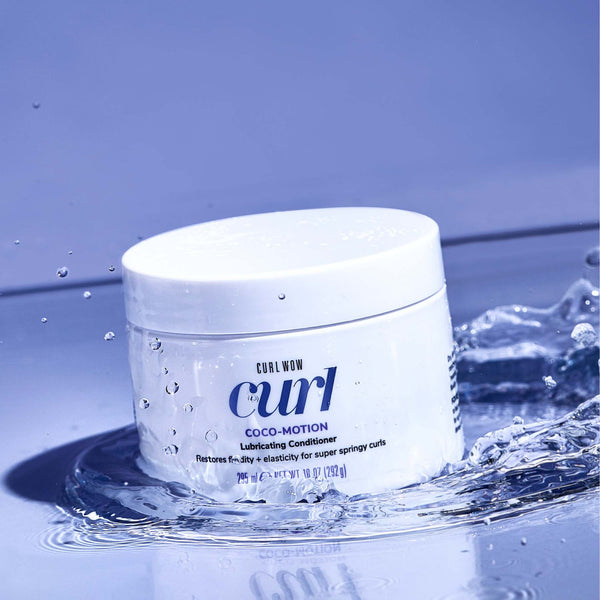
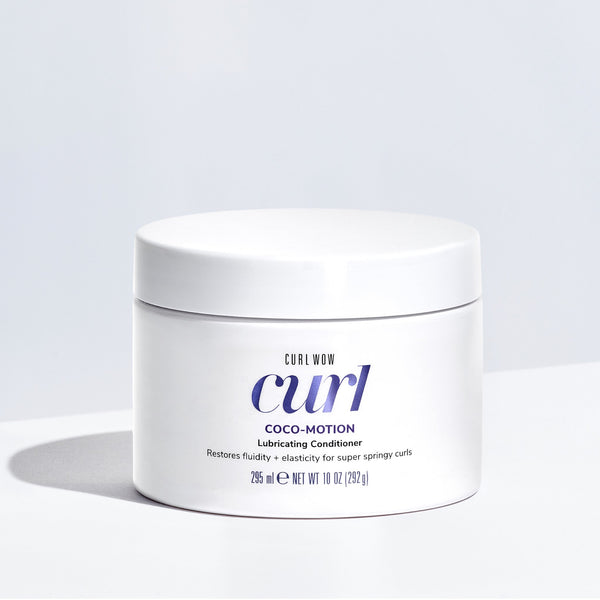
Pairing it with a lubricating conditioner can make detangling and clumping much easier during the wash process.
Conditioner is where many curly routines are won or lost
Conditioner is not just an optional softness step for curly hair. It often determines how easily you can detangle, how much frizz you create in the shower, and how smooth your hair feels once dry.
Apply conditioner through soaking wet hair and distribute it section by section. If your hair tangles easily, use that time to detangle slowly from ends upward. Then encourage curls to regroup before you rinse.
If your curl pattern needs moisture support first,Money Mist Leave-in Conditioner may also help with detangling and softness, although the best leave-in depends on your hair’s weight tolerance.
No single routine works for every curl type, but this is a strong starting framework.
Before washing
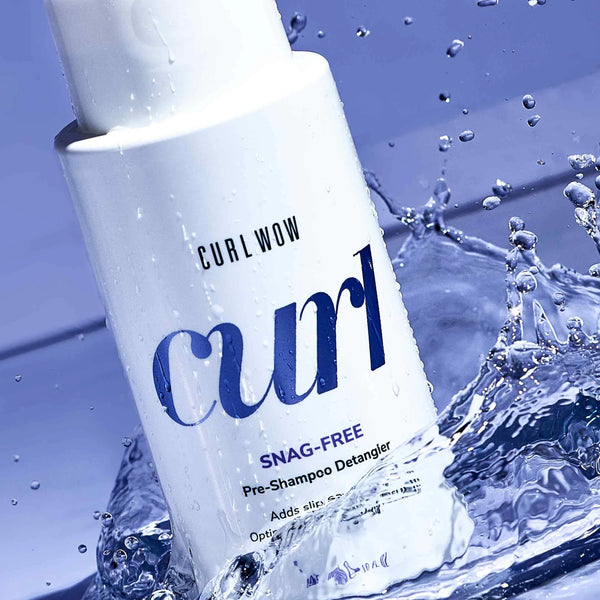
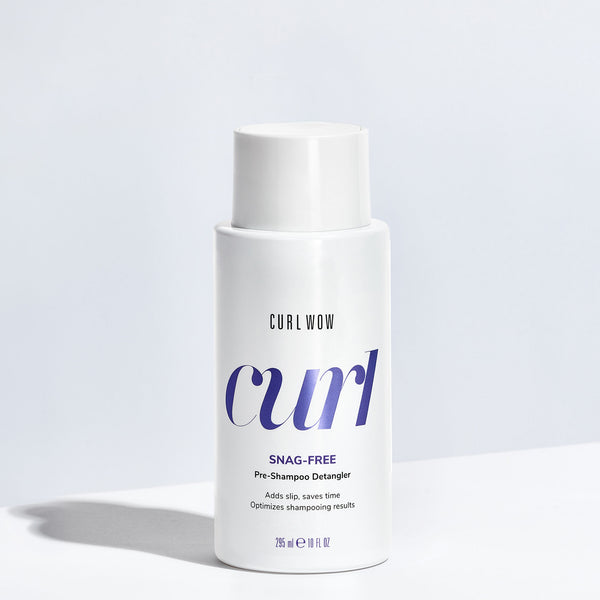
If your hair mats, knots, or shrinks tightly between wash days, start withSnag-Free Pre-Shampoo Detangler For Curly Hair on damp hair. Work in sections and use fingers or a suitable detangling tool to loosen shed hair and larger knots before shampooing.
In the shower
1. Cleanse the scalp
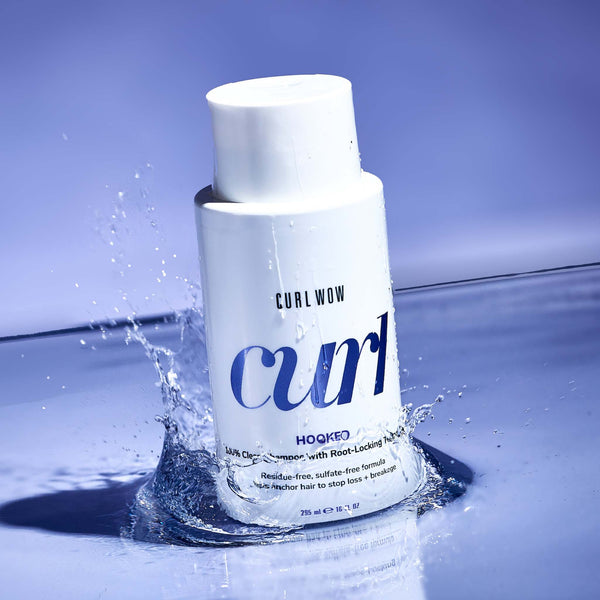
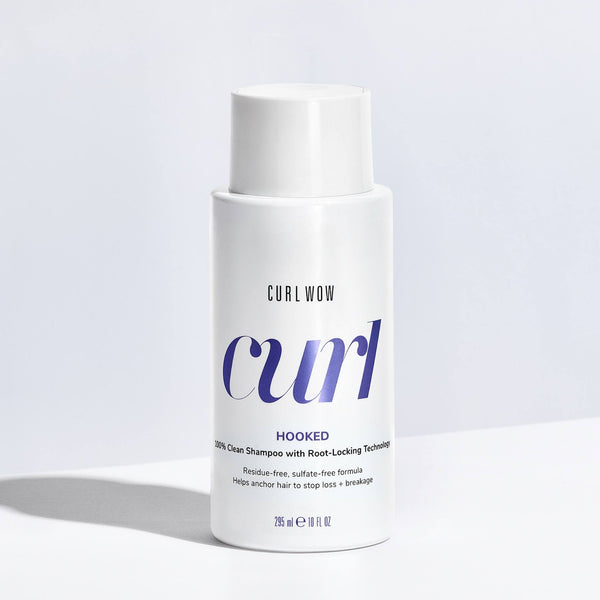
UseHooked 100% Clean Shampoo for Curly Hair mainly at the scalp. Let the lather move through the lengths as you rinse rather than scrubbing the ends aggressively.
As you finish rinsing, lightly rake or smooth sections so curls can regroup into their natural clumps.
Out of the shower
4. Remove excess water gently
Use a microfiber towel or cotton T-shirt to blot and scrunch. Do not rub.
Whether hair should stay soaking wet or become damp before styling depends on the formula and your hair. Some stylers distribute best on very wet hair.
Others give better hold and less dilution on damp hair. If you are trying a new product, test both methods on different wash days.
5. Apply leave-in or serum where needed
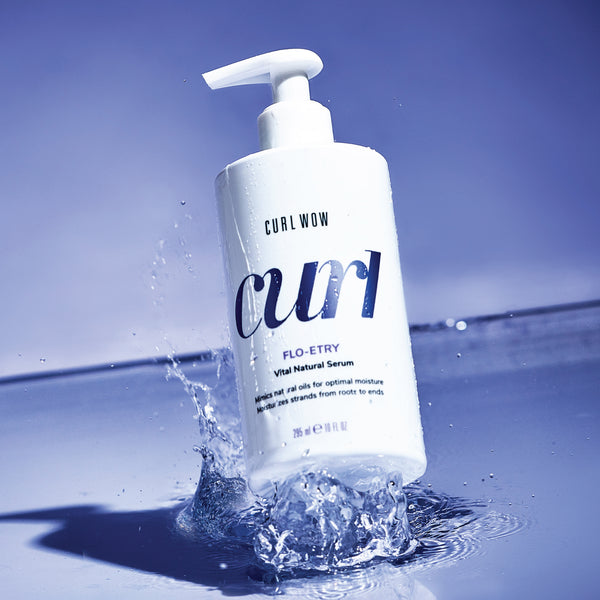
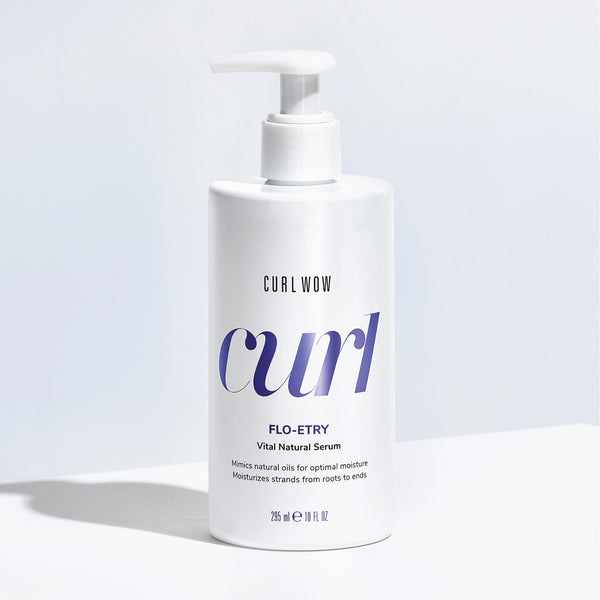
If your hair is dry, rough, or hard to separate smoothly, work a small amount ofFlo-etry Vital Natural Serum for Curly Hair through sections that need more lubrication. Keep the amount controlled if your hair gets weighed down easily.
6. Apply your main styler
Shake and applyShook Mix + Fix Bundling Spray for Curly Hair through sections for curl grouping and definition. Smooth or rake it through, then scrunch if that helps your pattern form.
7. Dry with minimal disturbance
You can air dry or diffuse. If you diffuse, cup sections into the diffuser and hold rather than blasting hair around. If you air dry, avoid touching the hair repeatedly while it sets.
8. Finish once fully dry
If a cast forms, gently scrunch it out after hair is completely dry.
For extra shine and a smoother finish, a small amount ofPop & Lock High Gloss Finish can help on the surface and ends.
How to Diffuse Curly Hair without Creating Frizz
Diffusing works best when you treat it as controlled drying, not high-speed blow drying.
A better diffusing method
Start after products are fully distributed
Keep airflow gentler if your hair frizzes easily
Cup curls into the diffuser rather than blowing them outward
Pause in each section before moving
Avoid overhandling between passes
Stop when hair is mostly dry if your ends get brittle easily
Some people prefer to hover diffuse first, meaning they hold the diffuser near the hair without pressing sections into the bowl.
Others get better definition by placing curls into the bowl right away. Both methods can work.
Repeated scrunching or separating before the hair is dry can break up definition.
6. Copying someone else’s wash schedule exactly
Wash frequency depends on scalp comfort, exercise, buildup, and formula choice. There is no universal perfect schedule for every curly head.
What to do if your curls still are not cooperating
When a routine is not working, the issue is often one of these:
1
Your products are too heavy for your density or strand size
2
Your hair needs more slip during detangling
3
You are styling too dry or too wet for the formulas you use
4
You are disturbing the curl pattern while drying
5
You have buildup from stylers, hard water, or infrequent cleansing
Frequently Asked Questions
Should you brush curly hair?
Usually only when it is wet and coated with a product that gives enough slip, such as conditioner or a detangler. Brushing dry curls tends to separate curl groupings and create frizz.
Is air drying better than diffusing for curly hair?
Not always. Air drying reduces direct heat exposure, but some people get better definition and less frizz from careful diffusing because the curl pattern sets faster with less chance of being disturbed.
Do curls need heavy creams to stay moisturised?
Not necessarily. Some curls do better with richer products, but many curl patterns, especially fine waves and loose curls, lose shape when formulas are too heavy. The best choice depends on your texture, porosity, density, and climate.
How often should you wash curly hair?
There is no single correct schedule. The right frequency depends on scalp oil, exercise, buildup, climate, and product use.
Wash often enough to keep the scalp comfortable and the hair free of excess residue, while adjusting formulas so the lengths do not feel stripped.
Why does curly hair frizz so easily?
Curly hair often has more opportunities for the cuticle to be disrupted because bends in the fiber can make lubrication less even from root to ends.
Frizz can increase with friction, humidity, dry brushing, rough drying, buildup, or product mismatch.
Curly hair usually looks its best when the routine is simple, consistent, and tailored to what your own pattern actually needs.
Focus on reducing friction, improving product distribution, and choosing stylers that support definition without burying your curls under too much weight. Small technique changes often make a bigger difference than adding more products ever will.




 Some people prefer to hover diffuse first, meaning they hold the diffuser near the hair without pressing sections into the bowl.